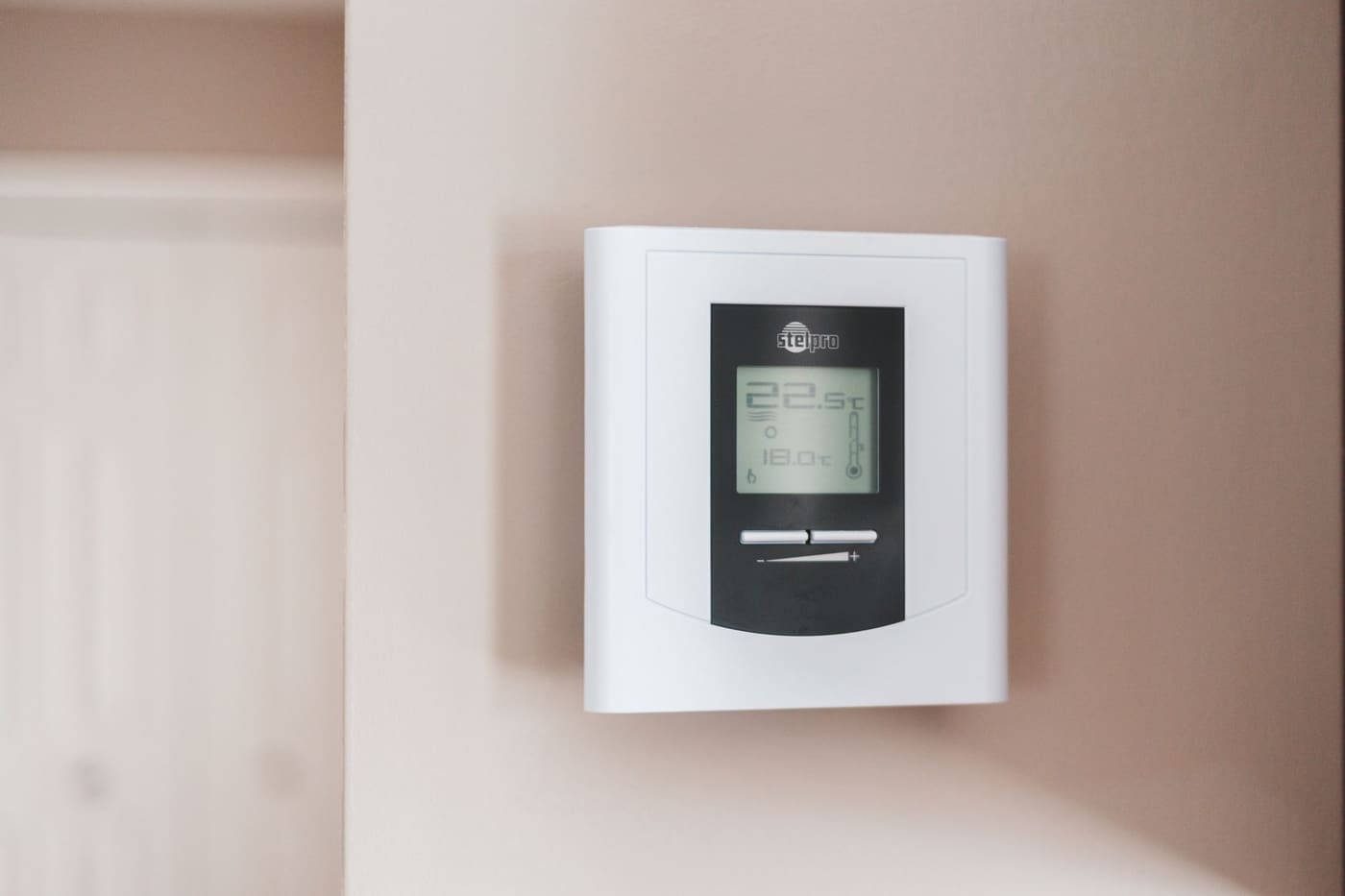
When your AC stops cooling, check the thermostat settings, the air filter, the breaker and the outdoor unit for blockage or ice before you call anyone. A thermostat set wrong, a clogged filter or a tripped breaker are common causes and cost little or nothing to fix. If none of those help, or you see ice, hear grinding, or smell burning, turn the system off and call an HVAC technician.
Running a struggling system can make some problems worse, such as a frozen coil or a failing compressor. The checks below go from easiest and safest to the point where a professional should take over. This guide does not cover refrigerant handling or wiring inside the units, which are work for certified or licensed technicians.
Start at the thermostat
- The mode is set to Cool, not Heat or Off.
- The setpoint is a few degrees below the current room temperature.
- Batteries are fresh if the thermostat uses them. A blank or dim display is a clue.
- The fan is on Auto unless you have a reason for On. A fan stuck on can blow warm air between cooling cycles.
- No schedule or hold setting is overriding yours, which matters most on smart thermostats.
A thermostat in direct sun, or next to a kitchen or a supply vent, can read the wrong temperature. Replacing a thermostat is low-voltage work, but turn the power off at the breaker first and photograph the wire labels, or hire it out.
Check the air filter
A dirty filter restricts airflow, so the coil can get too cold, the system cannot move heat well, and rooms stay warm. The US Department of Energy advises inspecting, cleaning or changing cooling system filters about once a month during heavy use, and your filter’s manufacturer will state how long it lasts.
- Turn the system off.
- Find the filter, usually behind a return grille or at the air handler.
- Slide it out and hold it to the light. If you cannot see light through it, replace it.
- Fit the new one with the arrow pointing toward the blower, in the direction of airflow.
A very high-efficiency filter in a system not designed for it can restrict airflow too, so match the filter to the system’s manual.
Look for ice on the coil or lines
If the larger copper line near the indoor unit is frosted, or you see ice on the evaporator coil, the system has frozen. Warm air from the vents and weak airflow are typical symptoms.
Common causes are a dirty filter, a blocked return, a failing blower, closed vents or low refrigerant from a leak. To thaw it, switch the cooling off at the thermostat and set the fan to On so air moves across the coil, which can take several hours. Do not chip the ice. Once thawed, replace the filter and see whether it returns. If it freezes again, the cause is likely low refrigerant or a mechanical fault, which needs a technician. Refrigerant is not consumed, so low refrigerant means a leak. The DOE and EPA both say a technician should locate and repair the leak instead of simply topping it off.
Check the breakers and the disconnect
A central AC uses at least two circuits, one for the indoor unit and one for the outdoor condenser.
- Check the panel for a tripped breaker, which often sits between on and off. Switch it fully off, then on once.
- Look at the service disconnect near the outdoor unit. Do not open it or touch the wiring. If it has a pull-out block or switch, make sure it is in the on position.
- Some air handlers have a switch on or near the unit that looks like a light switch and is sometimes flipped off by accident.
If the breaker trips again, leave it off. A repeat trip suggests a failing compressor, a shorted fan motor or a wiring fault, and an AC breaker is a job for an HVAC technician. See why a breaker keeps tripping for the general logic, and treat a burning smell, buzzing or a hot panel as reasons to switch off and call.
Inspect the outdoor unit
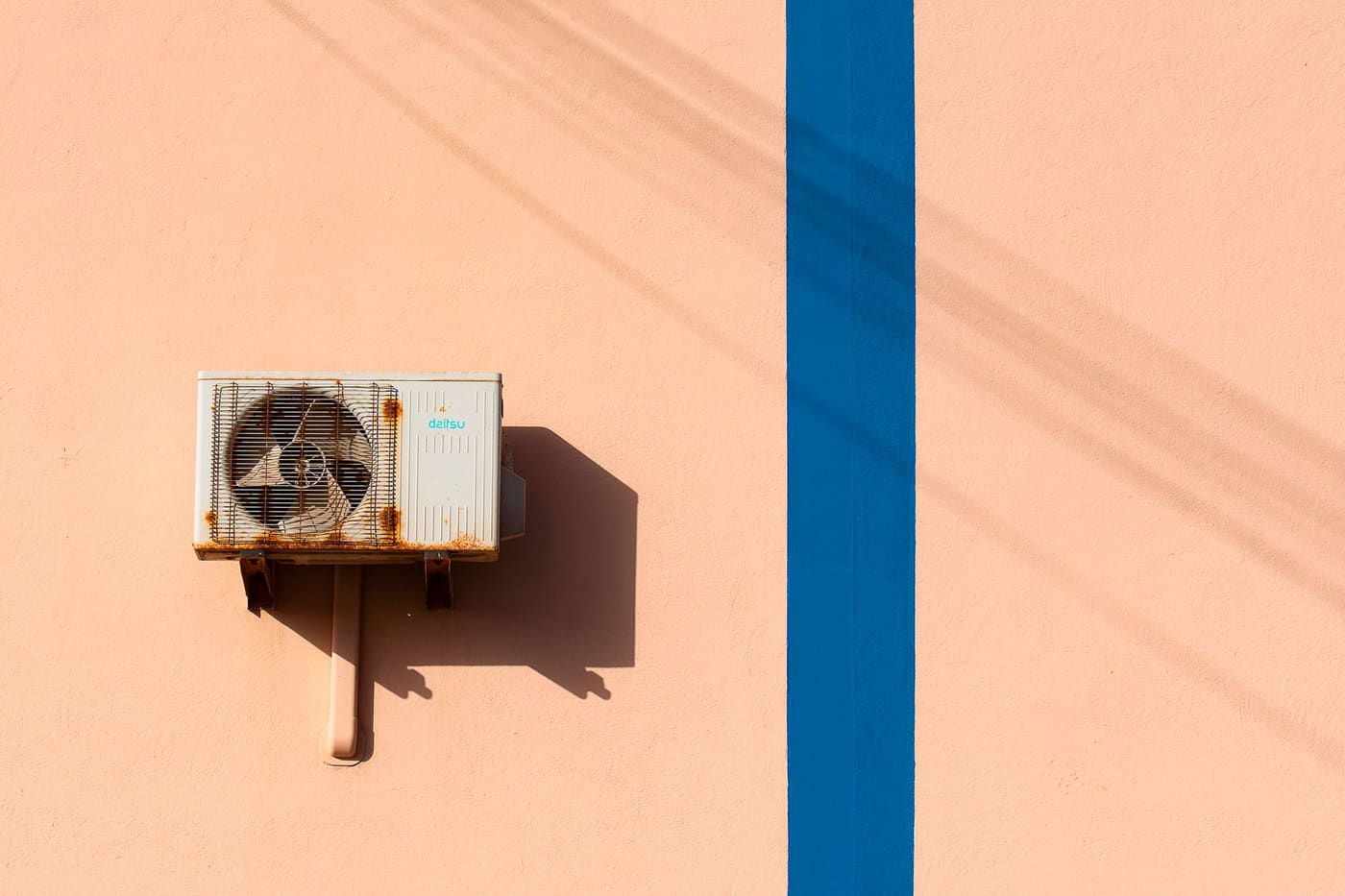
With power off at the disconnect or breaker, look at the condenser.
- Clear debris. Leaves, grass clippings and cottonwood fluff clog the fins. Keep clear space around the unit, and check its manual for the distance.
- Rinse the coil gently from outside with a garden hose, without high pressure that bends the fins. The DOE advises keeping coils clean for efficiency and checking the evaporator coil yearly.
- Watch the fan once power is back on. If it does not spin but the unit hums, or you hear grinding or squealing, shut it off. A failed capacitor or motor is possible, and capacitors can hold a charge even when power is off, so leave them to a technician.
- Look at the insulation on the larger refrigerant line. Damaged foam sleeves are a cheap repair.
Check the drain line and condensate switch
An AC removes moisture and drains it through a condensate line. If algae clogs the line, water can back up, trip a float switch and shut the system down. You may see water near the indoor unit or a full drain pan.
Many homeowners can clear the outside end of the line with a wet-dry vacuum. Follow your system’s manual for any cleaning product, and do not use bleach where metal parts are involved. Water leaking from an air handler can damage ceilings, so shut the system off. For a leak, what to do first when you find a water leak applies.
Airflow problems
Cooling may be fine while air is not getting where it should.
- Make sure supply vents are open and not blocked by furniture or rugs.
- Keep return grilles clear.
- Flexible duct in an attic or crawl space can be crushed or disconnected. Attics get extremely hot in summer, so work in the cooler part of the day, and never step between joists onto drywall. Many people hire this out.
- If only some rooms are warm, see why one room is hotter or colder than the rest of the house.
| Symptom | Likely cause | DIY or pro |
|---|---|---|
| Nothing runs | Tripped breaker, thermostat batteries, float switch | DIY checks, then pro |
| Fan runs, air is warm | Outdoor unit off, capacitor, refrigerant | Pro |
| Weak airflow | Dirty filter, closed vents, blower issue | Filter, then pro |
| Ice on coil or line | Low airflow or low refrigerant | Thaw and replace filter, pro if it returns |
| Water near indoor unit | Clogged condensate line | DIY clearing or pro |
| Burning smell or grinding | Motor or electrical fault | Shut off and call a pro |
| House cools slowly | Dirty coils, undersized system, leaky ducts | Pro evaluation |
When to call an HVAC technician
Call a licensed technician if the system freezes repeatedly, the outdoor fan or compressor will not start, the breaker trips, you hear grinding or hissing, you smell burning, or you suspect a refrigerant leak. In the US, the EPA’s Section 608 rules require certification to handle refrigerant, and it advises checking that a technician holds it. Repair costs range from small parts to compressor or whole-system replacement, so ask for a written estimate. If the system is old, a technician can help weigh repair against replacement, and a yearly tune-up often catches weak parts before a heat wave does.
Where this comes from
This guide draws on the US Department of Energy’s and ENERGY STAR’s home cooling maintenance advice (filters, coils, professional service) and the EPA’s guidance on refrigerant leaks and Section 608 technician certification. The thermostat, breaker and drain-line checks reflect common HVAC practice, and your system’s manual takes precedence over any general advice here. Costs, equipment rules and refrigerant regulations change, so check them with your technician and the named sources.