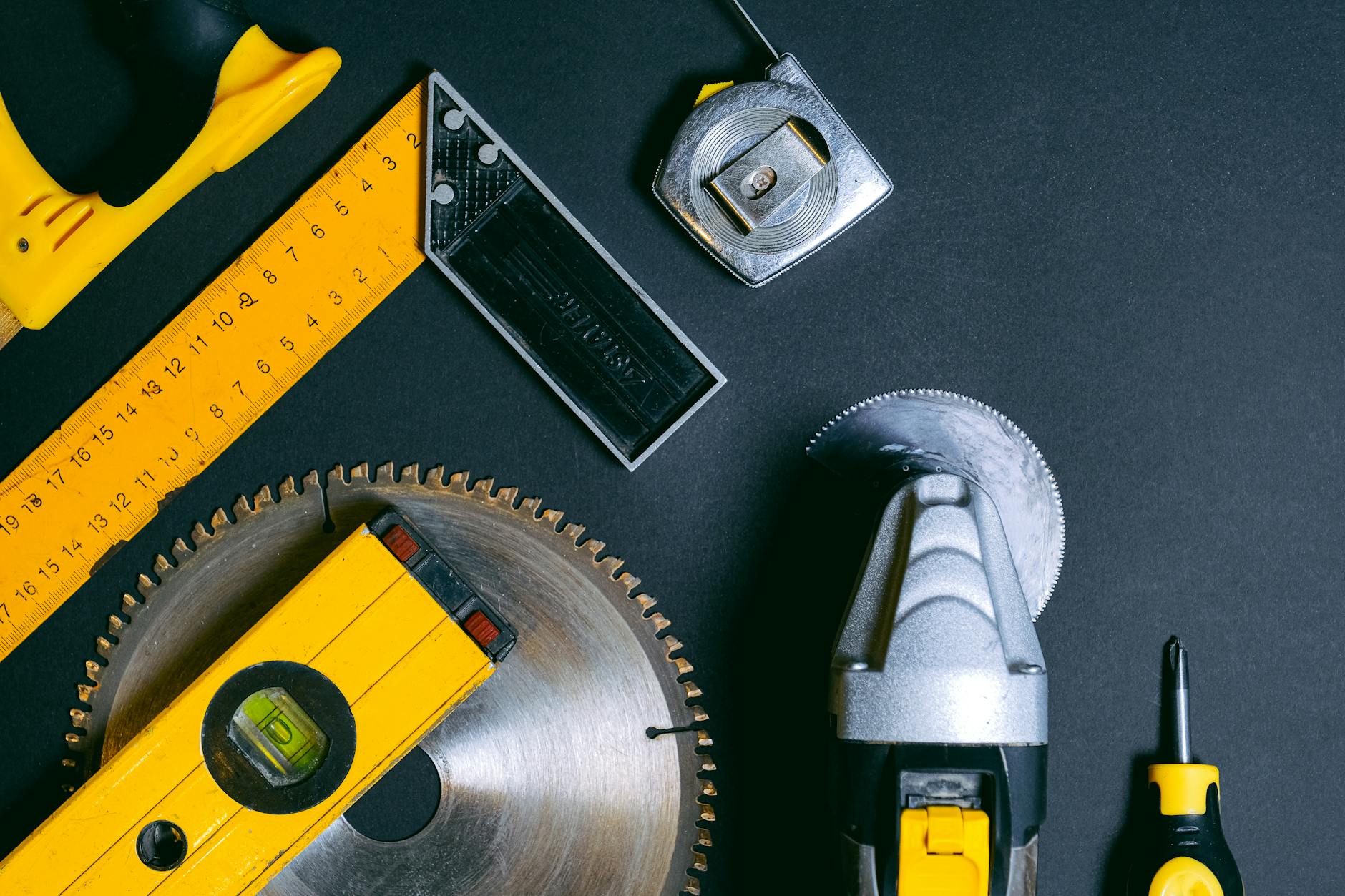
Every homeowner should own a small set of reliable tools: a cordless drill/driver, a claw hammer, a tape measure, screwdrivers, an adjustable wrench and channel-lock pliers, a level, a utility knife, a stud finder, a plunger and hand drain snake, and basic safety gear. That kit handles most common tasks, such as hanging shelves, tightening fixtures, clearing a simple clog, and patching a hole. Buy the basics in decent quality, then add specialty tools only when a job calls for them.
The goal is a kit you will actually use, not a big box of gadgets. Tools you reach for every few months justify better quality. Tools you use once a decade are better rented or borrowed. Prices vary widely by brand, store, and season, so this list leaves them out and focuses on what each tool is for.
Hand tools that do most of the work
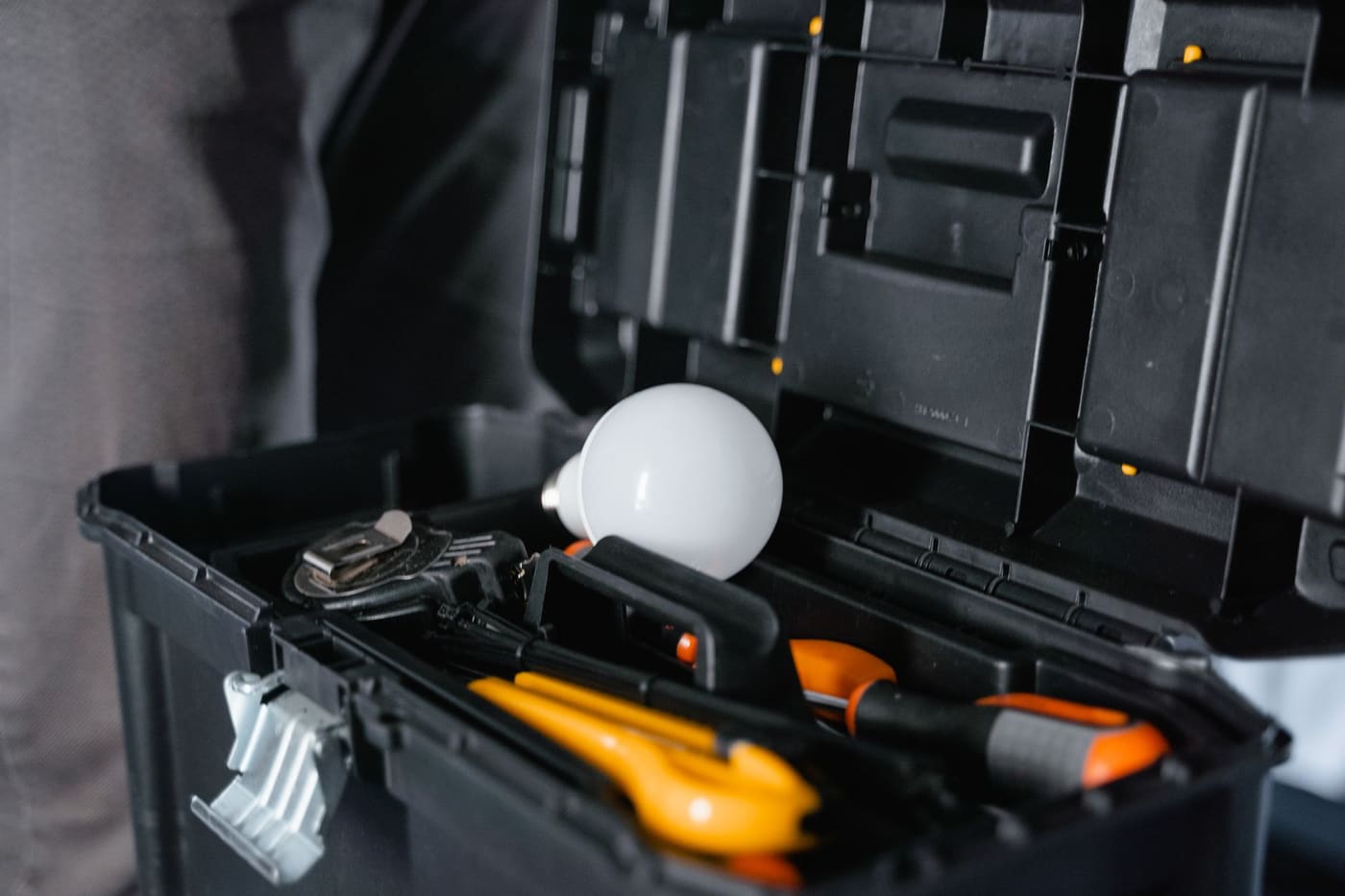
- Claw hammer, 16 ounce. A smooth face and comfortable handle handle most nailing and light demolition.
- Tape measure, 25 foot. Look for a wide blade that stays rigid when extended.
- Screwdrivers. A set with Phillips and slotted tips in several sizes, or a multi-bit driver with a magnetic tip.
- Adjustable wrench, 8 and 10 inch. For nuts, bolts, and plumbing fittings.
- Channel-lock (tongue-and-groove) pliers, 10 inch. For gripping pipes, nuts, and fittings.
- Needle-nose and slip-joint pliers. For small items and bending wire.
- Utility knife with spare blades. For cutting drywall, caulk tubes, and packaging. Replace dull blades, since a dull blade is more likely to slip.
- Level, 24 inch, and a small torpedo level for tight spots.
- Putty knives, 2 and 6 inch. For scraping and patching.
- Hex key (Allen) set. For furniture, faucets, and some fixtures.
- Hacksaw or small hand saw. For cutting pipe, plastic, and wood.
Look for a comfortable grip, good fit and finish, and a solid warranty. Feel in the hand matters more than the name on the handle.
Power tools worth owning
A cordless drill/driver is the single most useful power tool. Look for an 18- to 20-volt model with a battery and charger, a 1/2-inch chuck, and an adjustable clutch, ideally with a driver bit set and a few drill bits. Choose a battery platform you can share with other tools later.
Other power tools are optional at first.
| Tool | When it earns its place |
|---|---|
| Cordless drill/driver | Almost always |
| Oscillating multi-tool | Cutting trim, flush cuts, grout removal |
| Circular saw | Cutting lumber and plywood for shelves or simple builds |
| Random orbit sander | Refinishing furniture and trim |
| Wet-dry shop vacuum | Spills, drywall dust, small water cleanups |
| Jigsaw | Curved cuts |
Skip table saws, pneumatic nailers, and large compressors until a repeated project needs them. Many home centers rent specialty tools such as tile saws and floor sanders by the day. Read the safety instructions that come with any power tool, and wear eye and hearing protection.
Plumbing basics
A few inexpensive tools can save a service call.
- Cup plunger and flange plunger. The cup type is for sinks and tubs, and the flange type is for toilets.
- Hand drain snake (auger) for clogs within reach.
- PTFE plumber’s tape for threaded joints.
- Basin wrench, for reaching faucet nuts in tight spots.
- Bucket and old towels for catching water.
- A few spare washers, braided supply lines, and a toilet flapper.
Learn where your main water shutoff is and operate it once a year so you know it works. For clog logic, see what to check before a clogged drain turns into an emergency. Gas lines and gas appliance connections are not a homeowner tool-kit job; they belong to a licensed professional.
Electrical basics, and what to skip
Most homeowners need only a few safe items.
- Non-contact voltage tester. It detects voltage near wires and outlets, but it can miss a live wire, so treat it as a first check, not proof that a circuit is dead.
- Plug-in outlet tester. It shows whether a receptacle is wired correctly and whether a GFCI trips, and it flags common wiring faults.
- Flashlight or headlamp. Always useful.
- Spare bulbs, and fuses if your home uses them.
A multimeter is only worth owning if you already know how to use it safely. Skip wire strippers and conduit benders unless you are doing real electrical work. Panel work, new circuits, and anything involving live wiring belong to a licensed electrician. Electrical problems that are not safe to DIY lays out the boundary. If an outlet tester or any device shows a fault, a warm outlet, or a burning smell, stop and call a licensed electrician rather than opening anything up.
Fasteners, adhesives, and supplies
A shallow tub or drawer keeps the small items together and makes jobs faster.
- Assorted wood screws and drywall screws in common lengths.
- Wall anchors, including plastic expansion anchors and toggle bolts for hollow walls.
- Finishing nails and a nail set.
- Painter’s tape, duct tape, and electrical tape.
- Silicone and acrylic latex caulk, and a caulk gun.
- Spackle and joint compound for patching holes.
- Wood glue and construction adhesive.
- Cable ties and a few zip bags for loose hardware.
- General-purpose lubricant, and graphite lubricant for locks.
For hanging things, a stud finder helps you find solid mounting points. Heavy items such as large mirrors, cabinets, and TVs should be fastened into studs or rated anchors, not light drywall anchors alone. Electronic stud finders can give false readings, so confirm by testing a spot or using a magnetic finder that locates fasteners. Neither tool reliably shows pipes or wires, so be cautious drilling into walls near kitchens, bathrooms, and outlets.
Safety gear
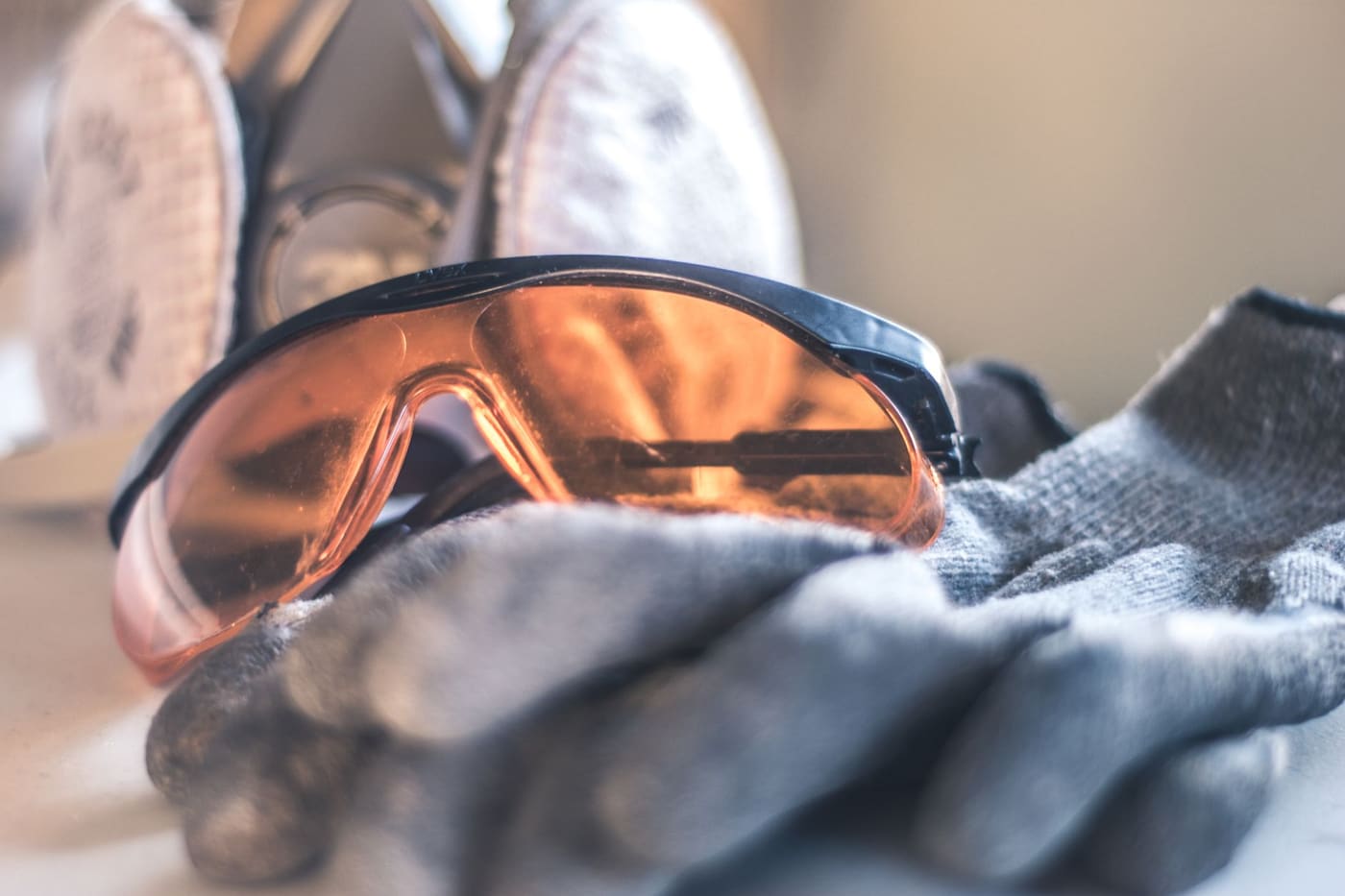
Do not skip this category.
- Safety glasses for every cutting, drilling, or hammering job.
- Work gloves and nitrile gloves, one for abrasion and one for chemicals and grime.
- Hearing protection for power tools and loud work.
- Dust mask or N95 respirator for sanding, insulation, and dusty cleanup. Chemical and paint-fume work calls for a respirator with the right cartridges, as the product label directs.
- Knee pads for flooring and under-sink work.
- A sturdy stepladder, and possibly an extension ladder. Check the duty rating label against your weight plus tools, set the ladder on firm level ground, and never stand on the top step. Keep metal ladders away from power lines. Work that needs a ladder on a roof or above a single story is better left to a pro with fall protection.
- First aid kit and fire extinguisher in the house, plus smoke and carbon monoxide alarms on each level.
The EPA advises that homes built before 1978 may contain lead-based paint, and some older materials contain asbestos. Test before sanding, scraping, or demolishing. Safety gear does not make those jobs safe for a homeowner to attempt without testing.
How to build the kit without overspending
- Start with the essentials above and add tools as projects arise.
- Buy better quality for the tools you will use most.
- Avoid large “hundreds of pieces” sets, where many items are low quality or rarely used.
- Rent specialty tools, and borrow rarely used ones.
- Store tools dry and organized in a toolbox so you can find them in an emergency.
- Keep a flashlight, bucket, and towels near the main water shutoff.
Knowing what the kit can do matters as much as the kit itself. When to call a pro instead of trying a DIY fix gives a framework for matching a job to your skills and tools.
Where this comes from
This is a practical starter list built on common homeowner maintenance practice rather than a published standard. The lead and asbestos statement follows the EPA’s guidance on older homes, and the safety-gear and ladder points follow general manufacturer and workplace-safety practice, including each product’s own label and instructions. Product quality, availability, and prices change, so check current options at a store or rental counter before buying.