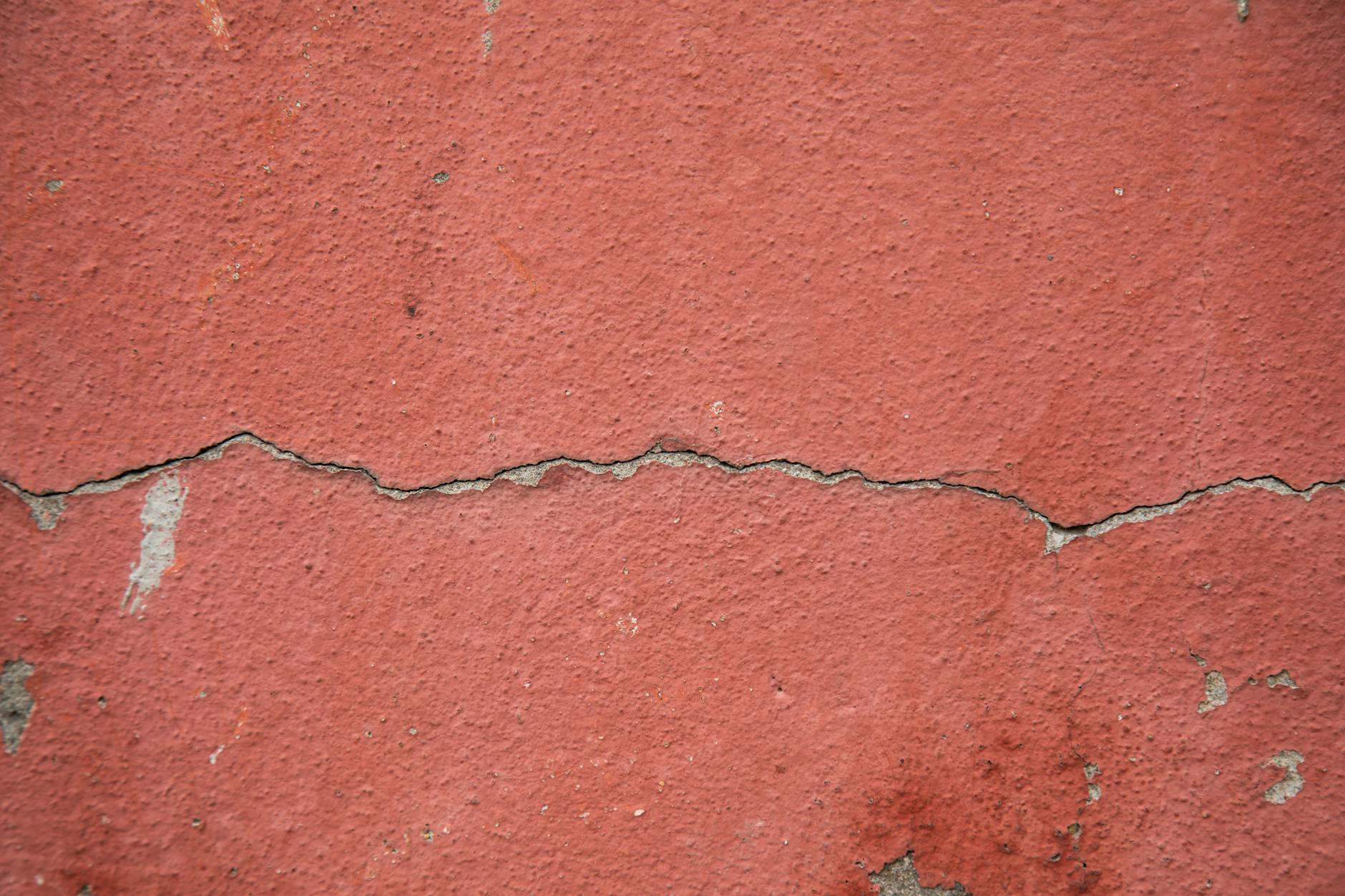
A wall crack is usually cosmetic when it is hairline thin, runs vertically or in a fine random pattern, stays the same size over months, and does not come with sticking doors, sloping floors, or water. Cracks that are wide (commonly guided at around a quarter inch or more), cracks that grow, stair-step cracks in brick or block, horizontal cracks in a foundation wall, and cracks where one side sits out from the other deserve a professional evaluation. Width, direction, location, and change over time tell you far more than the crack alone.
There is no single official width that separates harmless from serious, and the thresholds below are rules of thumb used in homeowner and inspection guidance. They shift with the material and the location. When in doubt, especially in a foundation or load-bearing wall, a structural engineer’s opinion settles it.
Most houses crack somewhere. Wood framing shrinks as it dries, drywall joints move with seasonal humidity, and new houses settle. The skill is telling that kind of movement from the kind that keeps going.
Common cosmetic cracks and why they happen
Many cracks come from materials moving slightly, not from structural failure.
- Hairline cracks at drywall seams and corners. Joint tape and compound can crack as lumber dries and humidity changes. They are common in the first years of a new house.
- Small diagonal cracks at the corners of doors and windows. Stress concentrates at the corners of openings. Small ones are often cosmetic; wide or growing ones need a look.
- Ceiling cracks at the wall joint. Often a tape failure, or seasonal movement of roof trusses that lifts the ceiling edge slightly.
- Plaster map cracks. Older plaster develops fine branching cracks as it ages and loses grip on the lath behind it.
- Paint cracks that look like fine webs, from thick paint or poor adhesion.
- Shrinkage cracks in new concrete or fresh patching compound.
These tend to be thin, do not offset (one side sticking out from the other), and do not enlarge.
Size, direction, and pattern
A plastic crack gauge card, a ruler, or a pocket comparator can measure width. A rough guide:
| Crack | Typical meaning | Action |
|---|---|---|
| Hairline, vertical or random | Usually cosmetic | Monitor; patch once stable |
| Under about 1/8 inch | Often minor settling or shrinkage | Monitor closely for growth |
| About 1/8 to 1/4 inch | Needs attention | Track and consider a professional look |
| 1/4 inch or wider | Possible structural movement | Have it evaluated |
| Horizontal crack in a foundation wall | Possible soil or water pressure | Call a structural engineer |
| Stair-step crack in brick or block | Possible foundation movement | Call a professional |
| One side offset from the other | Differential movement | Have it evaluated |
| Wedge-shaped, wider at one end | Rotation or settlement | Have it evaluated |
These are rules of thumb, not code limits. A hairline crack in a foundation wall that leaks is a different matter from the same crack in a bedroom ceiling.
Where the crack is matters
Cracks in interior non-bearing walls and ceilings are less likely to indicate structural trouble than cracks in foundation walls, exterior masonry, or at the base of load-bearing walls.
- Foundation walls: Thin vertical cracks in poured concrete are common from shrinkage and are often just sealed against water. Horizontal cracks, bowing walls, or cracks that leak after rain suggest soil pressure or drainage problems.
- Brick and block: Stair-step cracks along mortar joints, or cracks around a quarter inch or wider, are worth evaluating.
- Around chimneys: A chimney separating from the house may indicate settlement.
- Slab floors: Hairline cracks are common. Cracks where one side is higher, or that open over time, need a look.
Other signs that make a crack more serious
A crack alone is one piece of information. Combined with these, it becomes a stronger warning.
- Doors and windows that stick, jam, or no longer latch where they used to work.
- Gaps opening between walls and ceilings, floors, or trim.
- Floors that slope, feel bouncy, or show visible dips.
- Cracks that appear suddenly or run across several rooms.
- Moisture, stains, or mold near the crack, suggesting water is involved.
- Cracks that line up from the foundation up through the walls.
- A leaning or bulging wall, or a chimney or porch pulling away from the house.
If several appear together, the house may be moving. Drainage problems, plumbing leaks, nearby tree roots, expansive clay soil, and nearby excavation can all drive foundation movement. Fresh, rapid changes, such as a new gap you can see grow over days, a wall visibly leaning, a floor that suddenly drops, or sounds of cracking, are reasons to keep people out of that area and get an engineer or your local building department involved promptly.
Monitor it before deciding
Time is the best diagnostic for borderline cracks.
- Mark the ends. Draw a pencil line across each end of the crack and write the date.
- Measure the width at the widest point and photograph it with a ruler or coin in the frame.
- Check every few weeks, and after seasons change or heavy rain.
- Use a crack monitor. A simple two-piece plastic gauge that bridges the crack shows movement in millimeters and is inexpensive.
- Keep records. Dated photos make it easy to show a contractor or engineer. See what to document before calling a home repair pro.
A crack that does not change across several months and seasons is much more likely to be cosmetic. One that widens, lengthens, or reopens after patching is active.
How to repair a cosmetic crack
Wait until the crack has been stable. Patching a moving crack just means patching it again.
- Scrape away loose paint and debris, and widen the crack slightly with a utility knife.
- For drywall seams, apply joint tape and then joint compound in thin coats, letting each dry fully and sanding lightly. Many cracks need two or three coats, each feathered wider than the last.
- For small hairline cracks, flexible paintable caulk can outperform rigid compound because it moves with the wall.
- Prime the patch, then paint.
Drywall dust is irritating, so wear a dust mask and eye protection. The EPA advises that homes built before 1978 may contain lead-based paint, and some older plaster, texture, or other materials may contain asbestos. Do not sand or scrape suspect surfaces without testing first, and use certified professionals where the rules require them.
What not to do
- Do not remove, cut, or alter a load-bearing wall or support to “fix” a crack. Structural work needs an engineer and, usually, a permit.
- Do not seal a foundation crack with caulk and forget it if it is leaking or growing. Sealing can hide a worsening condition.
- Do not assume a crack is harmless because a previous owner painted over it. Check the history.
When to hire a pro
Call a structural engineer, who gives an independent assessment and is not selling the repair, when cracks are wide, horizontal in foundation walls, stair-stepped, offset, or paired with sticking doors and sloping floors. A foundation repair contractor can then provide estimates, and a second opinion before major work is reasonable. When to call a pro instead of trying a DIY fix and how to decide which home problem needs a quote first help you plan the next steps.
Seasonal movement and new construction
Some movement is expected. In a new house, framing lumber keeps drying for the first year or two, and drywall seams and corners may open slightly. If a builder warranty applies, note cracks in writing before the warranty window ends. In regions with expansive clay soil, wet and dry cycles can swell and shrink the soil under a foundation, so cracks may open in dry late summer and partly close in the wet season. That cyclical movement is different from a crack that only ever gets wider.
Indoor humidity matters too. Wood shrinks in dry winter air and swells in humid summers, so a thin crack that opens slightly in winter and narrows in summer is typically ordinary seasonal movement. Keep tracking it for at least a full year.
If any warning sign appears, check the stop-and-call-now checklist.
Where this comes from
There is no single published standard for when a wall crack becomes structural, so this guide pulls together commonly used homeowner and inspection rules of thumb on crack width, direction, location, and growth, and says so where thresholds are approximate. The lead and asbestos statements come from the EPA’s guidance on older homes. Repair costs, permit rules, and warranty terms change and vary by area, so check them with a licensed engineer or contractor and your local building department.